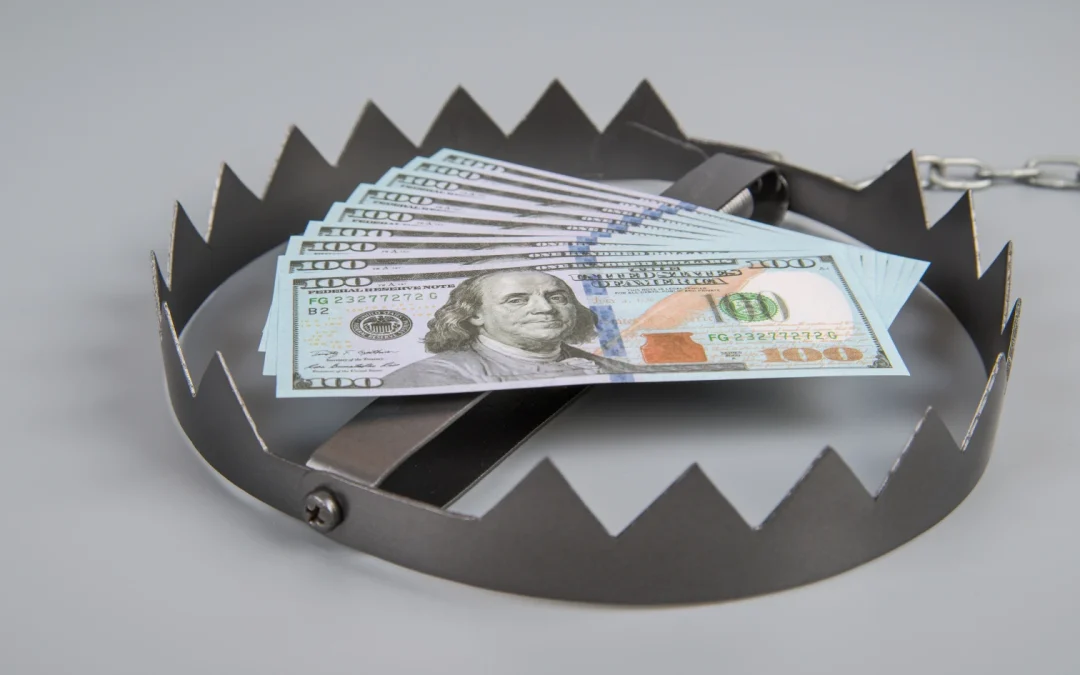
High leverage looks like a shortcut to big profits. In reality, it’s usually a shortcut to blowing accounts. Leverage doesn’t just increase your upside — it amplifies every mistake, every emotional decision, and every normal market wiggle into a potentially fatal hit. This article breaks down why leverage is so dangerous, how it quietly destroys good traders, and what to do instead so you can stay in the game long enough to actually win.
Table of Contents
- 1. What Leverage Really Is
- 2. Why Traders Love High Leverage (And Why That’s a Trap)
- 3. The Math: How Leverage Turns Normal Moves Into Account Killers
- 4. Margin Calls, Liquidations, and Forced Exits
- 5. High Leverage Fuels Overtrading
- 6. The Psychological Damage: Fear, Greed, and Revenge Trading
- 7. Spread, Slippage, and Fees Hurt More Than You Think
- 8. The “I’m Right” Illusion: When Leverage Makes You Think You’re Skilled
- 9. Safer Rules: How Pros Use Leverage Without Dying
- 10. Leverage vs. Market Type: Forex, Crypto, Metals
- 11. A Simple Plan to Lower Leverage and Trade Smarter
- FAQs
1. What Leverage Really Is
Leverage means controlling a larger position than your account balance would normally allow. If you have $1,000 and use 50:1 leverage, you can control up to $50,000 worth of exposure (depending on broker rules and margin requirements).
Important: leverage is not “more profit.” Leverage is more sensitivity. It makes each price movement matter more to your account — both good and bad.
2. Why Traders Love High Leverage (And Why That’s a Trap)
High leverage is attractive because it promises fast results:
- “I can grow a small account quickly.”
- “I don’t need much capital.”
- “One big move can change everything.”
The trap is that the market doesn’t reward urgency. High leverage encourages you to trade like every day is a final exam — and that creates the exact behavior that destroys traders: oversized positions, emotional decisions, and repeated “all-in” attempts.
3. The Math: How Leverage Turns Normal Moves Into Account Killers
Markets move. Even “quiet” markets still fluctuate. When your position size is too large, normal price noise becomes catastrophic.
Example: The Same Trade, Two Different Leverage Choices
Let’s say you have a $1,000 account.
- Low/controlled exposure: You risk 1% ($10) on a trade.
- High leverage exposure: You risk 20% ($200) without realizing it.
In the first scenario, you can be wrong several times and still be fine. In the second scenario, a few bad trades — or one fast spike — can wipe you out.
Here’s the brutal truth: You don’t need to be wrong often to blow up. With high leverage, you just need to be wrong at the wrong time.
4. Margin Calls, Liquidations, and Forced Exits
High leverage increases the chance you’ll get forced out of a trade at the worst possible moment.
- Margin call: your broker/exchange requires more collateral because your trade is losing.
- Liquidation (common in crypto): your position is closed automatically when your margin can’t cover the loss.
- Stop-out: broker closes trades to protect themselves.
And this is the part many traders don’t understand: you can be right on direction and still get liquidated because you used too much leverage and couldn’t survive the pullback.
5. High Leverage Fuels Overtrading
High leverage changes your incentives. You start hunting for action instead of waiting for quality. Why?
- You feel pressure to “make it worth it.”
- You chase moves because you think speed equals success.
- You try to recover losses quickly.
Overtrading usually doesn’t look like chaos at first. It looks like “being active.” But activity isn’t edge — discipline is.
6. The Psychological Damage: Fear, Greed, and Revenge Trading
When leverage is too high, every tick feels personal. That creates emotional trading loops:
- Fear: you cut winners early because the position feels “too big.”
- Greed: you hold losers because you “need it to come back.”
- Revenge trading: you increase size after a loss to get it back fast.
High leverage doesn’t just increase risk — it increases stress. And stress reduces decision quality. Even if your strategy is good, your execution collapses under pressure.
7. Spread, Slippage, and Fees Hurt More Than You Think
With high leverage, small costs become huge because you’re trading larger size.
- Spread: you start every trade slightly negative.
- Slippage: fast markets can fill you worse than expected.
- Funding/overnight fees: especially in crypto perpetuals and some forex products.
When you’re oversized, a little slippage can equal a big chunk of your account. This is one reason traders feel like “the market is rigged” — but often it’s just position sizing.
8. The “I’m Right” Illusion: When Leverage Makes You Think You’re Skilled
High leverage can create fake confidence. A few quick wins can make you feel like you “figured it out.” The problem is that leverage can make random outcomes look like skill.
If your results are coming from leverage, not a proven process, the account eventually experiences a move it can’t survive. That’s when traders say, “I was doing great… until I wasn’t.”
9. Safer Rules: How Pros Use Leverage Without Dying
Professional traders don’t think in terms of “I use 50x.” They think in terms of risk per trade and total exposure.
Here are practical rules that keep traders alive:
- Risk 0.5%–1% per trade (especially if you trade often).
- Use a stop-loss that makes sense, then size the position to match your risk.
- Cap total exposure (don’t stack multiple trades that all depend on the same outcome).
- Assume volatility expands (quiet markets don’t stay quiet forever).
- Survive first — your #1 job is staying in the game.
Key idea: leverage is a tool for efficiency, not a tool for gambling.
10. Leverage vs. Market Type: Forex, Crypto, Metals
Different markets punish leverage differently:
- Forex: often tight spreads, but sudden news spikes can be brutal. Many blow-ups happen around high-impact events.
- Crypto: volatility is naturally higher, and liquidation engines can close you out fast. High leverage + crypto is a common account killer.
- Metals (Gold): can move smoothly, then rip suddenly. Leverage feels safe until it isn’t — especially during macro headlines.
In all cases, the “right” leverage is the one that lets you survive normal price movement without panic.
11. A Simple Plan to Lower Leverage and Trade Smarter
If you feel like leverage has been hurting you, here’s a simple reset plan:
- Pick a max risk per trade (start with 1% or less).
- Set a daily loss limit (example: stop trading at -2% on the day).
- Reduce position size until your heart rate stays normal during trades.
- Only take A+ setups for 2 weeks (no boredom trades).
- Track outcomes (wins/losses, but also: did you follow rules?).
Leverage stops being a hidden danger when your process controls it. If your process doesn’t control it, leverage controls you.
FAQs
Is leverage always bad?
No. Leverage is a tool. It becomes dangerous when it pushes your position size beyond what your account can safely handle. The problem is usually not leverage itself — it’s overexposure.
What’s a “safe” leverage amount?
There isn’t one universal number because safety depends on volatility, your stop-loss distance, and your risk per trade. A better question is: “How much of my account am I risking if price moves against me?” Many disciplined traders keep it around 0.5%–1% per trade.
Why do exchanges and brokers offer 50x or 100x if it’s so dangerous?
Because many traders demand it, and higher leverage often increases trading volume. More volume can mean more fees. Just because it’s offered doesn’t mean it’s appropriate for most people.
Can high leverage work if I’m right most of the time?
Even traders with high win rates can blow up with high leverage because one large loss can erase many small wins. High leverage makes your account fragile — and fragility eventually gets exposed.
What’s the biggest sign my leverage is too high?
If you feel anxious, you move stops constantly, you take profits too early, or you can’t tolerate normal pullbacks — your position is likely too large.
How do I reduce leverage without feeling like I’m “not making enough”?
Shift your focus from “how much can I make today?” to “how consistent can I be this month?” Lower leverage often improves execution, which can improve results over time — even if each trade feels smaller.
What’s a simple rule I can remember?
If one trade can seriously damage your account, your leverage is too high. Survival first. Growth second.
Optional disclaimer (recommended): This content is for educational purposes only and is not financial advice. Trading involves risk, and leverage can increase losses as well as gains.